Public Visual Governance Series

EVIDE Visual Doctrine

One governance problem. One visual model. One forensic boundary at a time.

A public series exploring the structural gap between traditional execution evidence and externally defensible accountability - through visual diagrams, forensic governance models, and evidentiary architecture concepts.

About this series

The EVIDE Visual Doctrine was created to explain, through visual models and forensic governance diagrams, why logs are not evidence, and why the question "who was responsible?" requires a fundamentally different evidentiary infrastructure than operational monitoring.

While most AI governance discussions focus on logs, explainability, and operational monitoring, the EVIDE Visual Doctrine focuses on a different question: how can responsibility, authority, oversight conditions, and evidentiary closure be reconstructed independently when disputes emerge?

Each article introduces one specific governance problem and maps the architectural boundary conditions required to address it. Topics include:

AI Act logging limitations
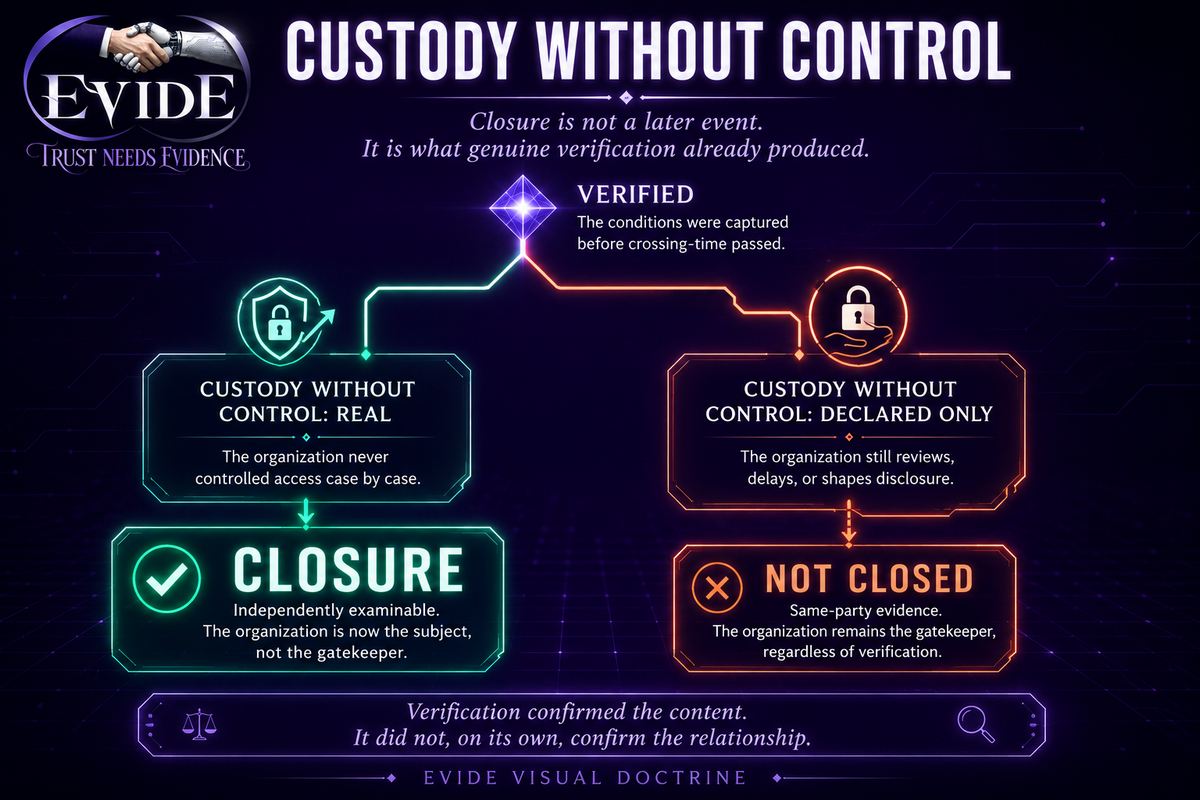
Same-party evidence
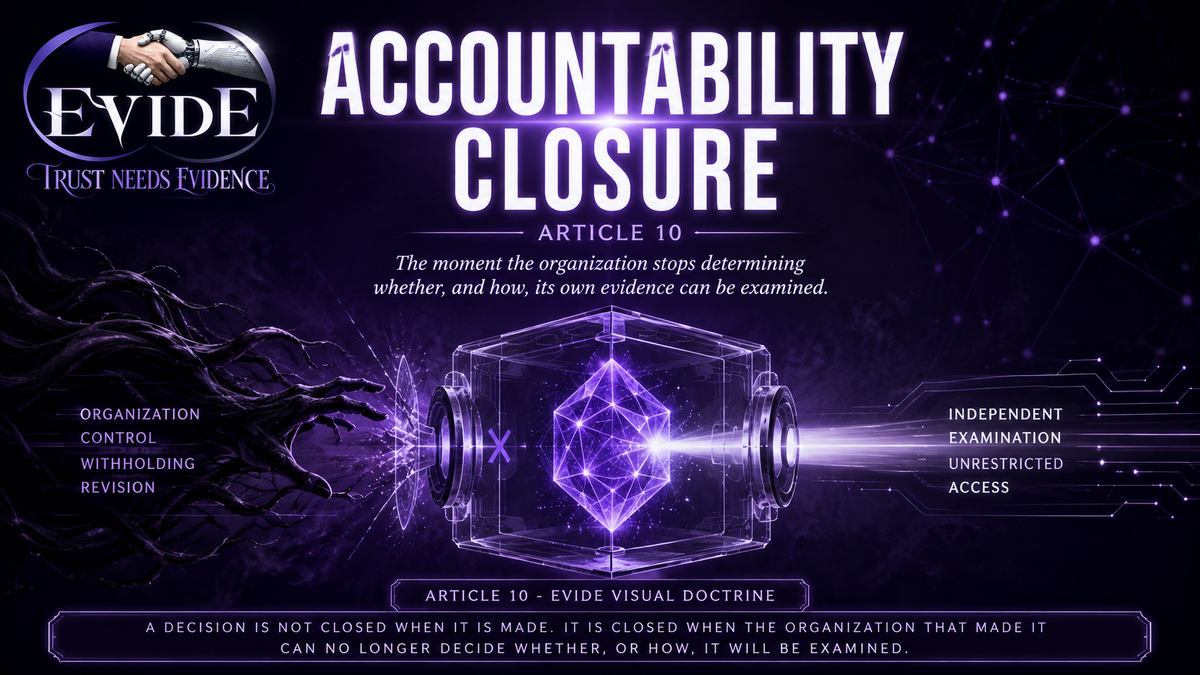
Responsibility closure
Boundary readiness
Human oversight classification
Governance continuity degradation
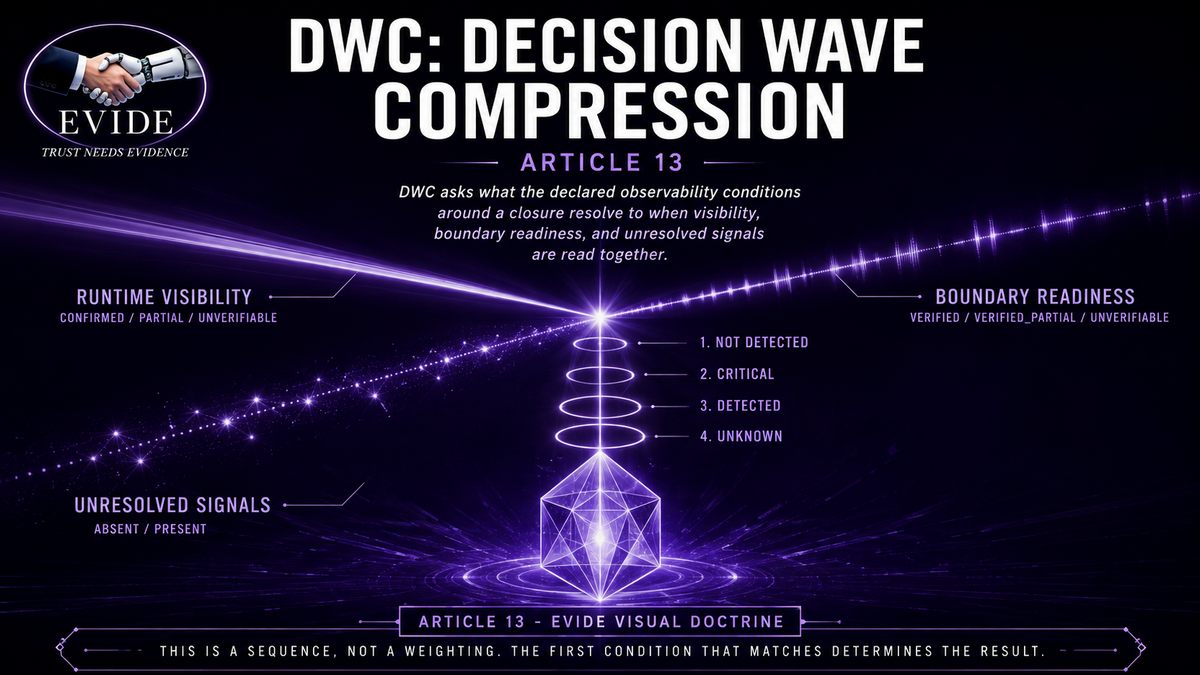
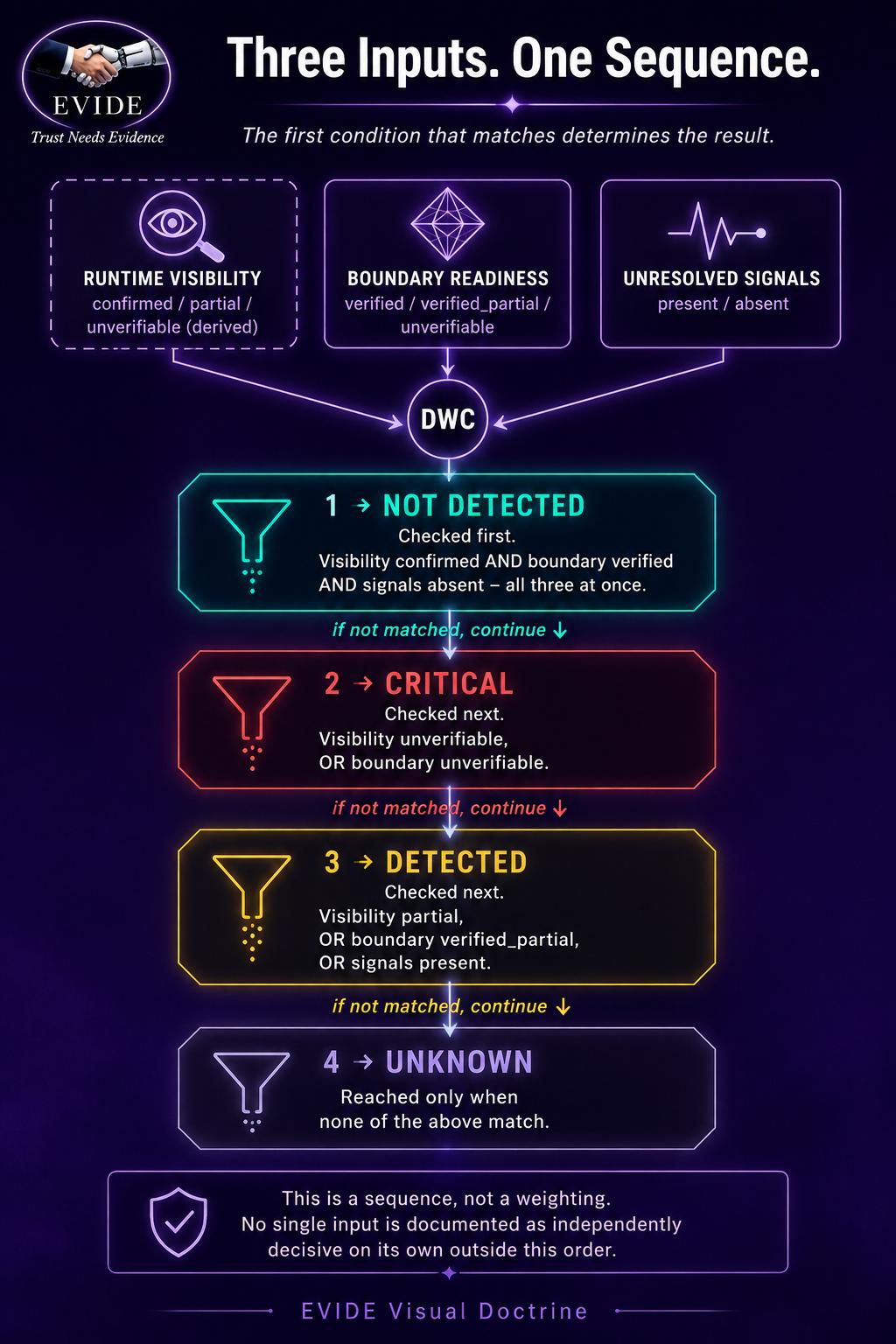
Decision Wave Compression (DWC)
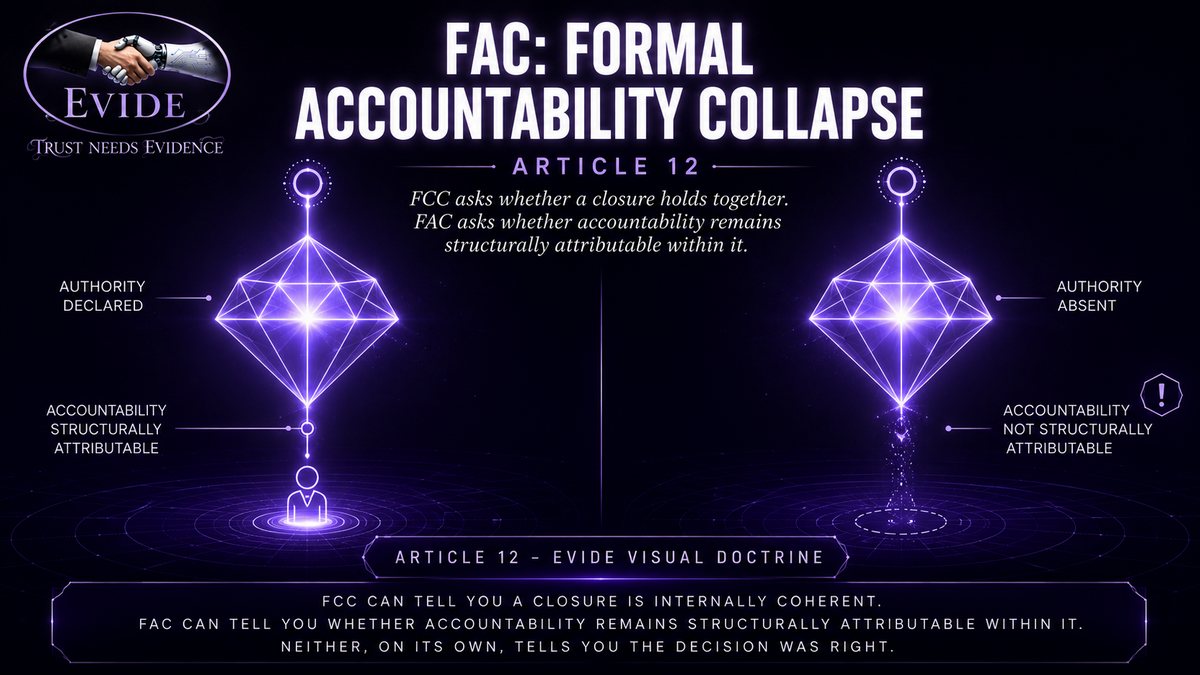
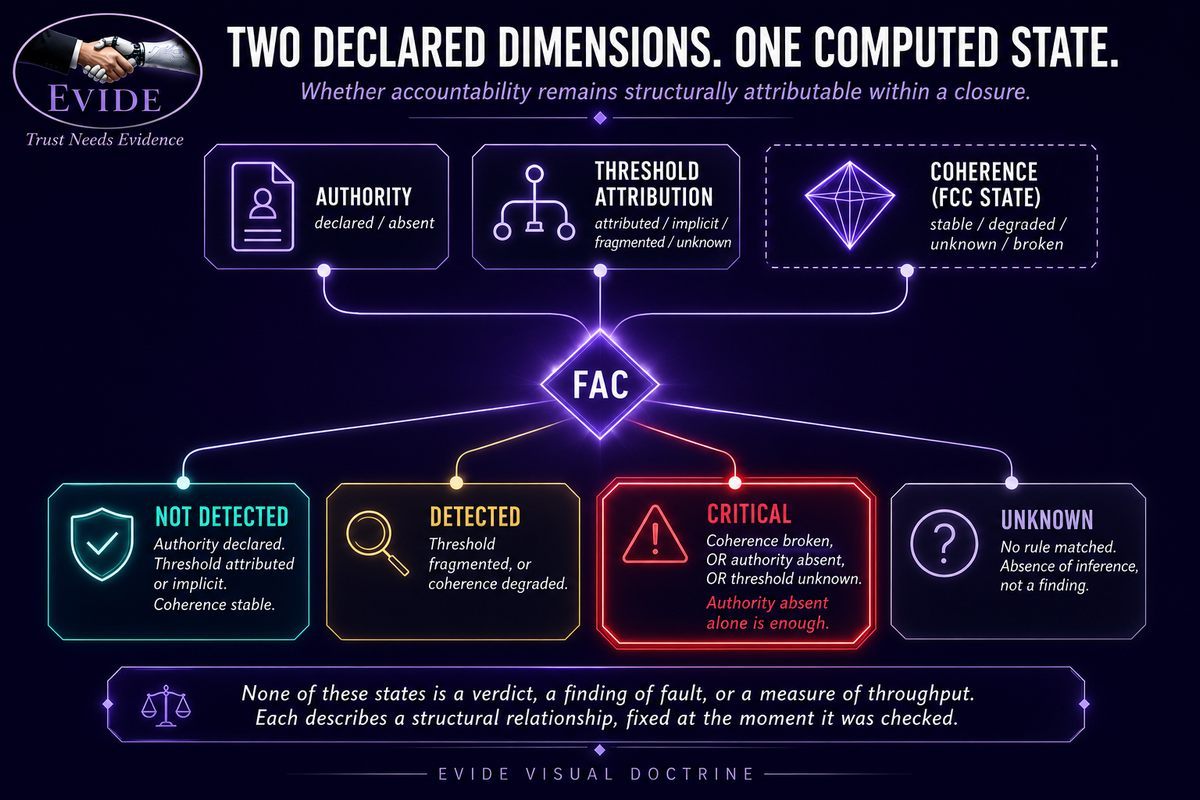
Formal Accountability Collapse (FAC)
Agent-to-evidentiary boundaries
Governance stabilization trajectories
External evidentiary reconstruction

Visual Doctrine Index

19 articles planned
Phase 1 โ€” The Problem
EVIDE Visual Doctrine Article 01 - AI Act Requires Logs. Logs Are Not Evidence.

AI Act Requires Logs. Logs Are Not Evidence.

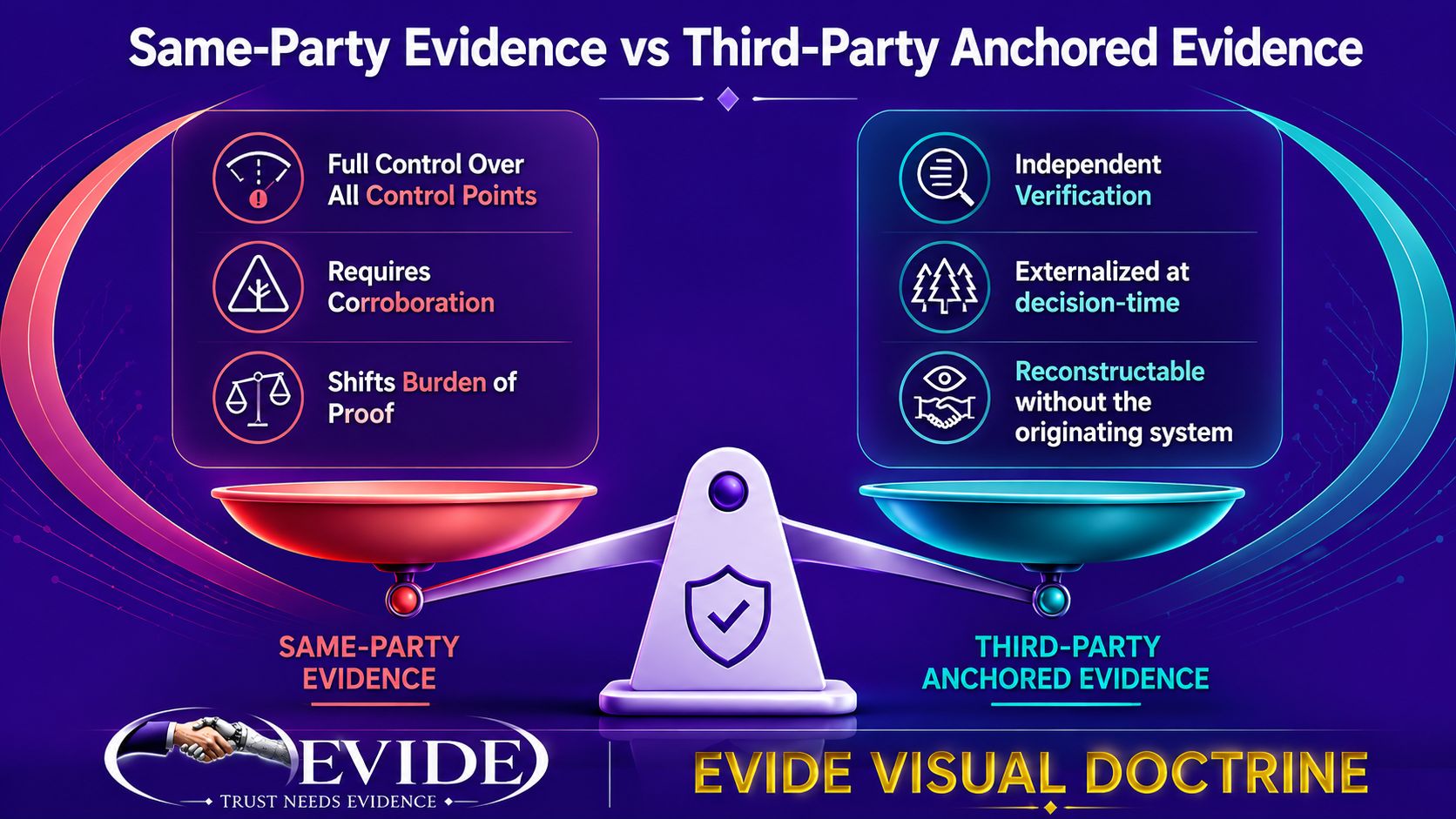
The EU AI Act requires logging and traceability under Articles 12, 14, 16, 17, and 26. But logs remain internally controlled records generated and retained by the same organization that made the decision. This article introduces the concept of same-party evidence and explains why execution logs alone cannot independently reconstruct responsibility conditions during disputes, audits, or litigation.
Open Article on LinkedIn
Related Video โ€” Article 01
Same-Party Evidence vs Third-Party Anchored Evidence

Same-Party Evidence

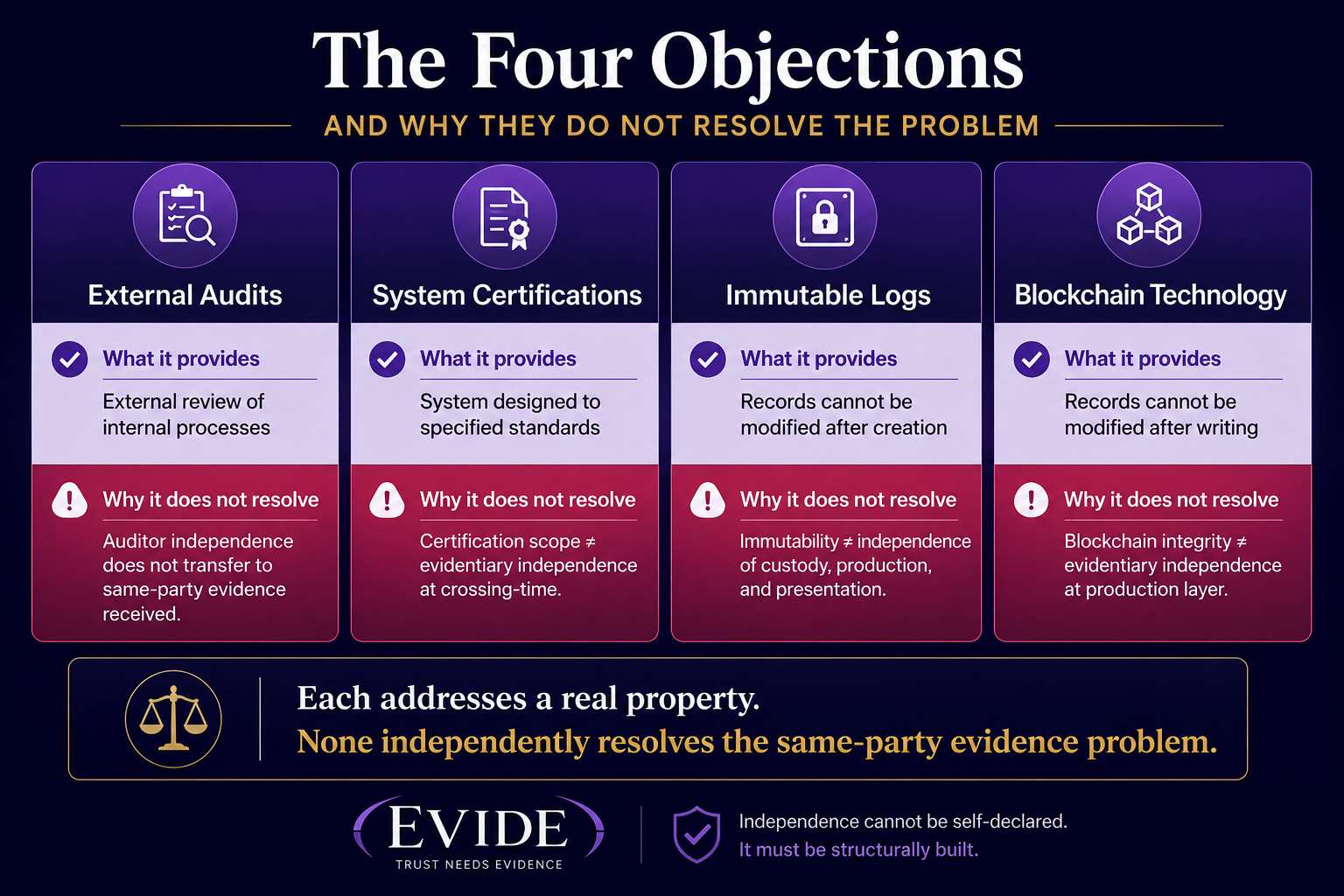
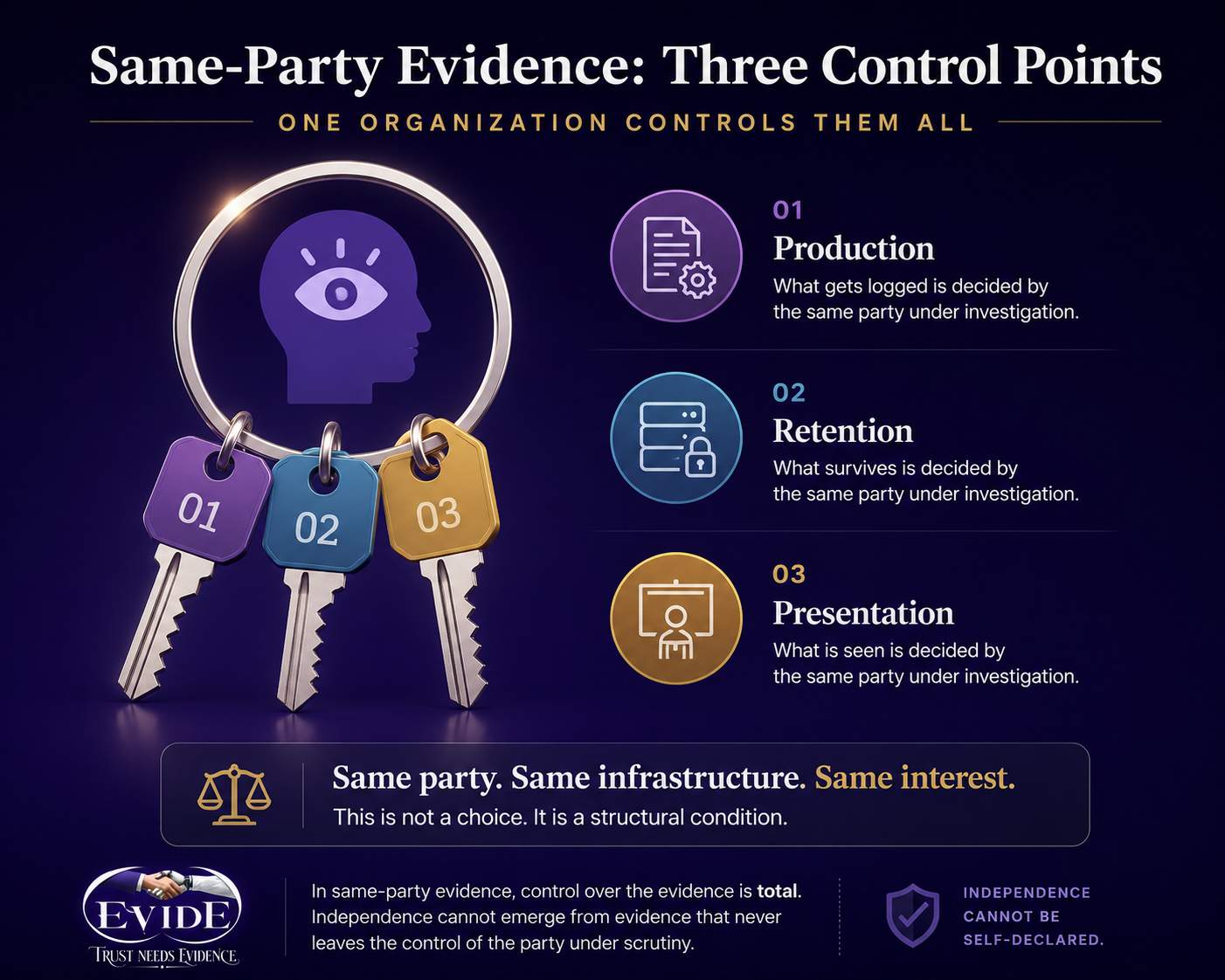
The organization investigating itself through its own logs. When evidence is produced, retained, and interpreted by the same party whose decisions it is meant to document, independence collapses before the dispute even begins. This article establishes same-party evidence as a pillar concept of evidentiary AI governance - and introduces the four objections organizations raise, and why none of them resolves the structural independence problem.

Visual models โ€” Article 02
Same-Party Evidence: Three Control Points - One organization controls them all The Four Objections - And Why They Do Not Resolve The Problem
Open Article on LinkedIn
Coming soon

Reconstruction Independence

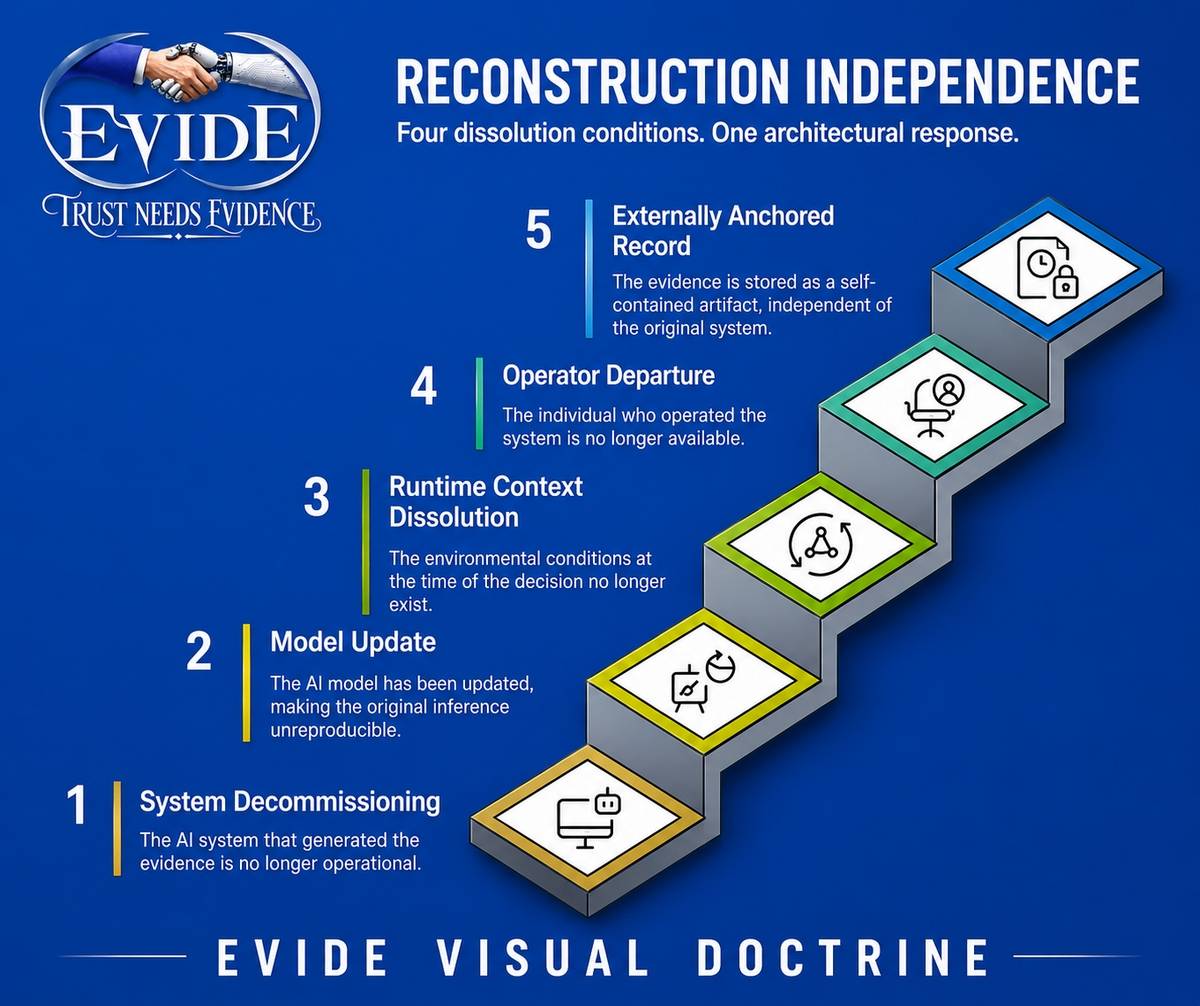
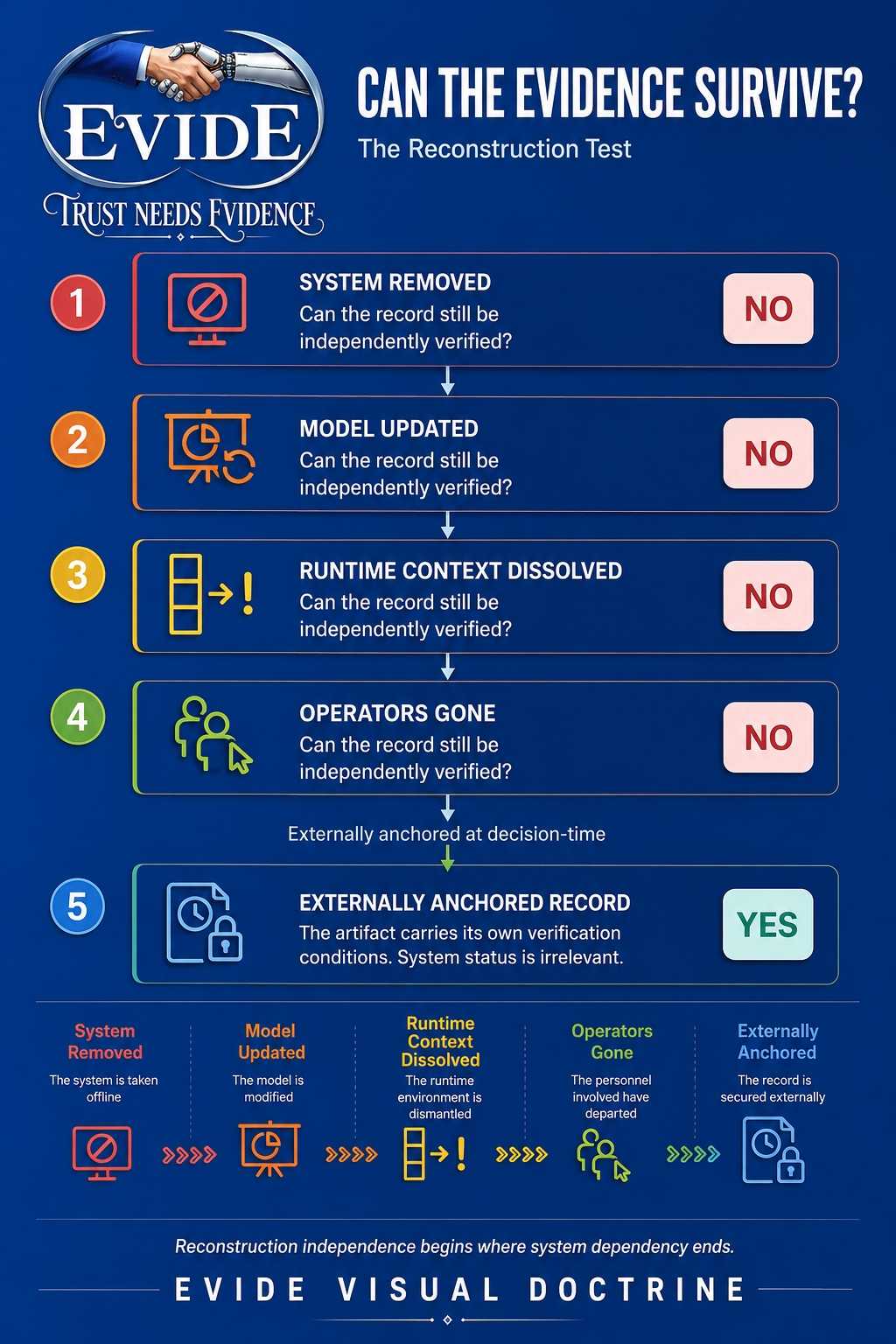
When evidence depends on the same system that generated the dispute, reconstruction is not independent. This article maps the architectural requirement for externally reconstructable records - evidence that can be verified without access to the originating system, its operators, or its runtime context.

Article not yet published
Coming soon

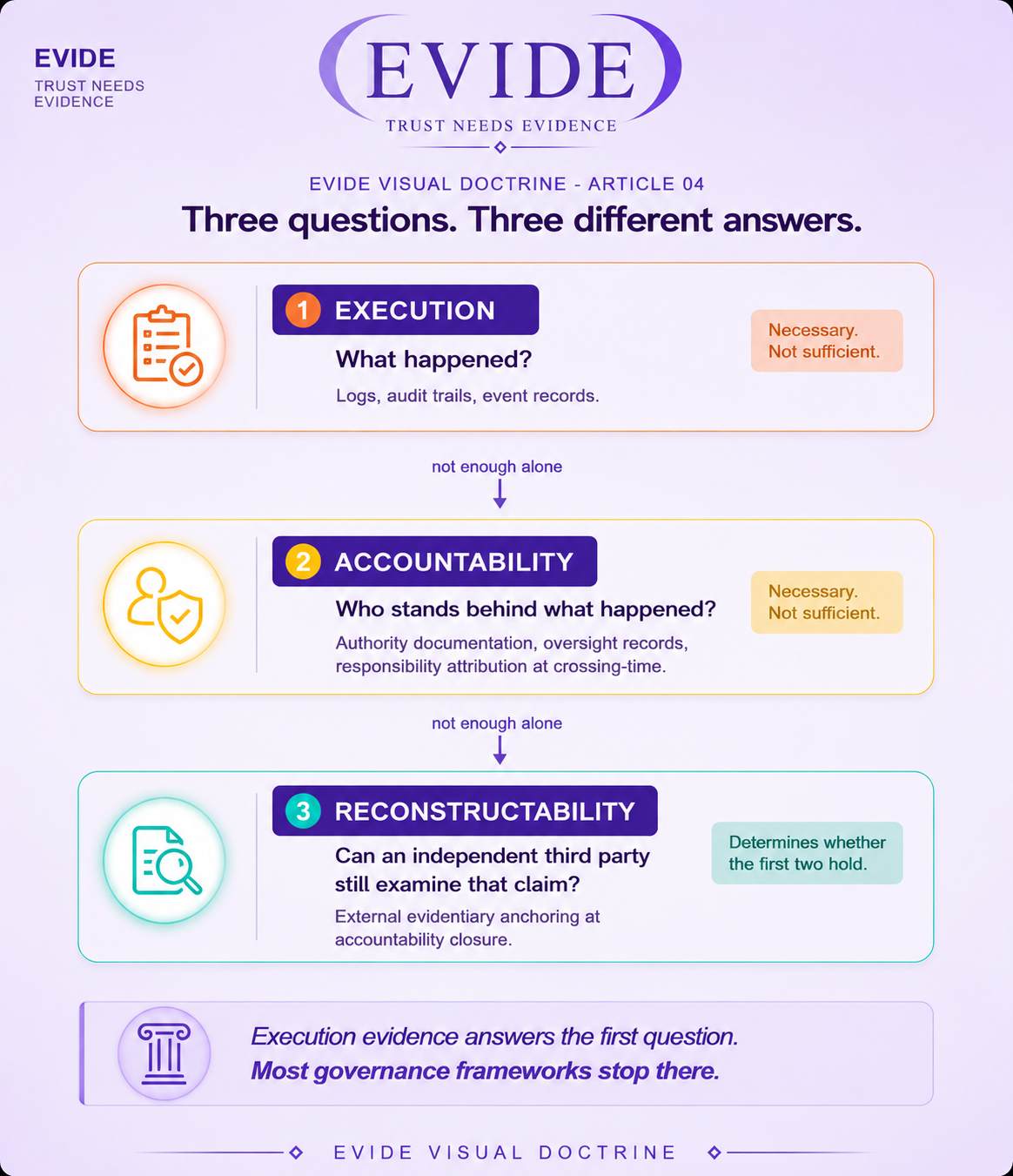
Why Execution Evidence Is Not Enough

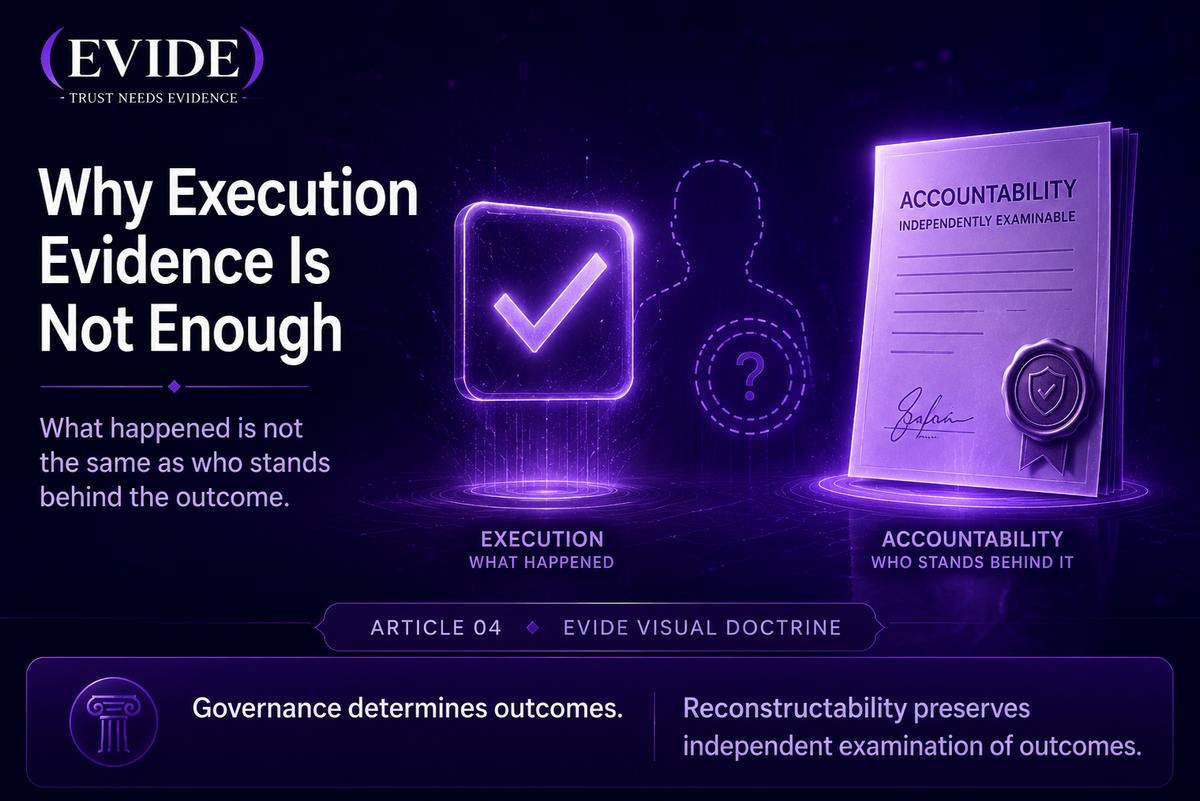
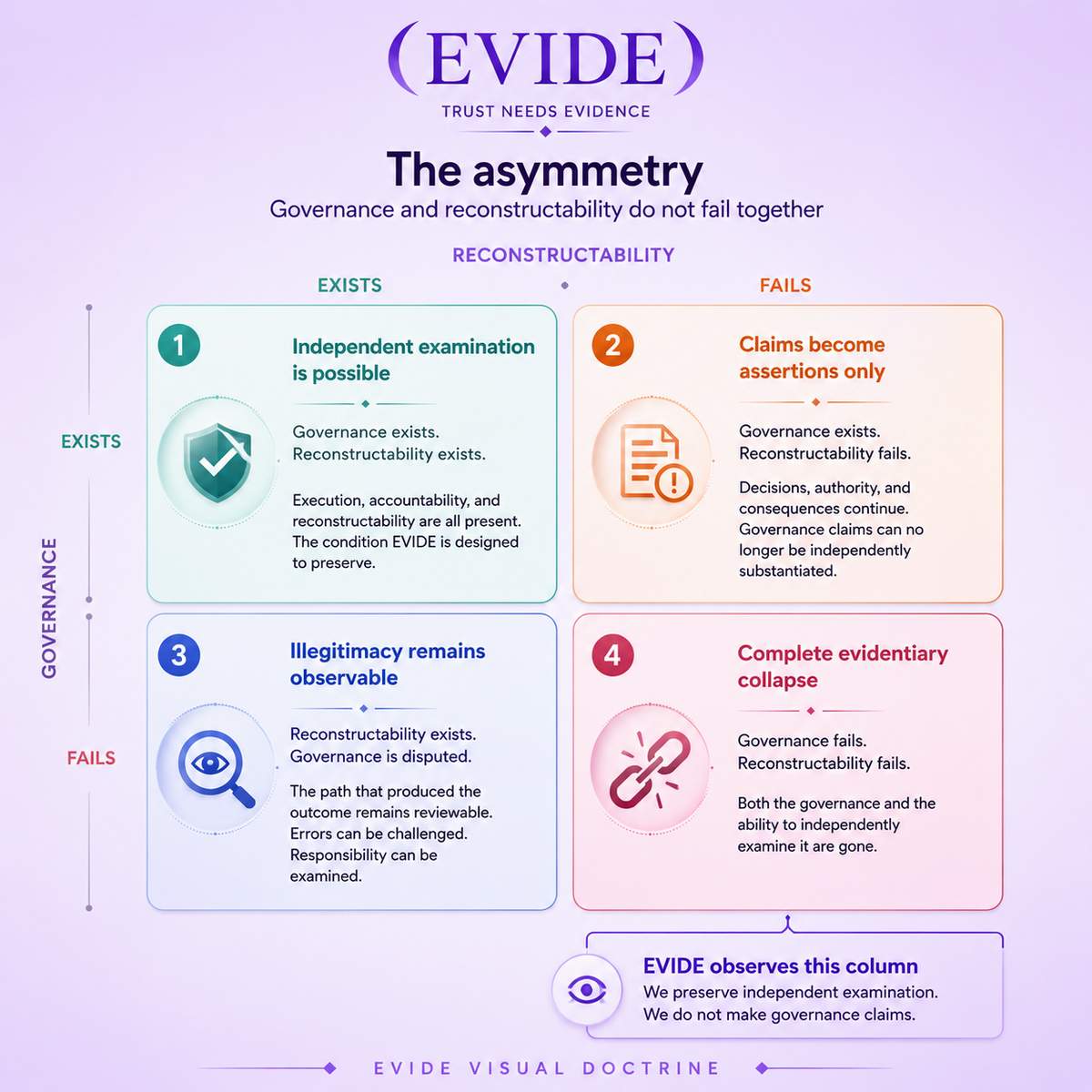
"What happened" is not the same as "who stands behind the outcome." This article maps the structural difference between execution systems and evidentiary accountability - and why both are necessary but not interchangeable.

Article not yet published
Coming soon

The Governance Gap

Post-hoc reconstruction, internal logs, missing closure, governance ambiguity. When a dispute emerges, the governance gap becomes visible - and it is almost always too late to close it.

Article not yet published
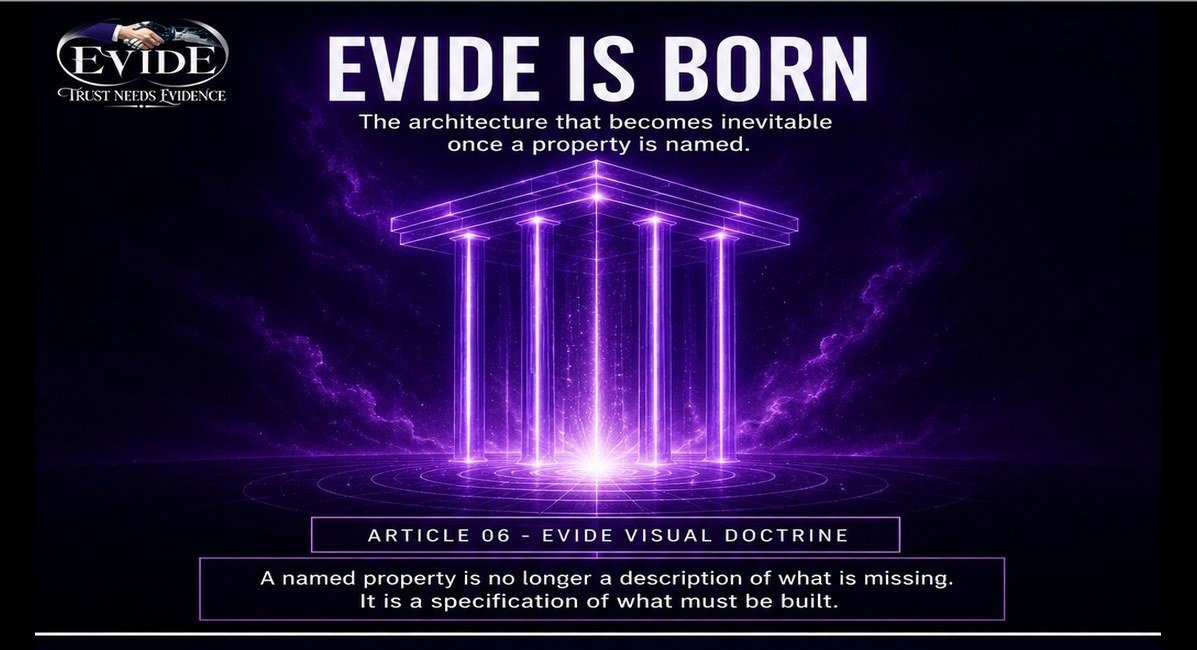
Phase 2 โ€” EVIDE is born
Coming soon

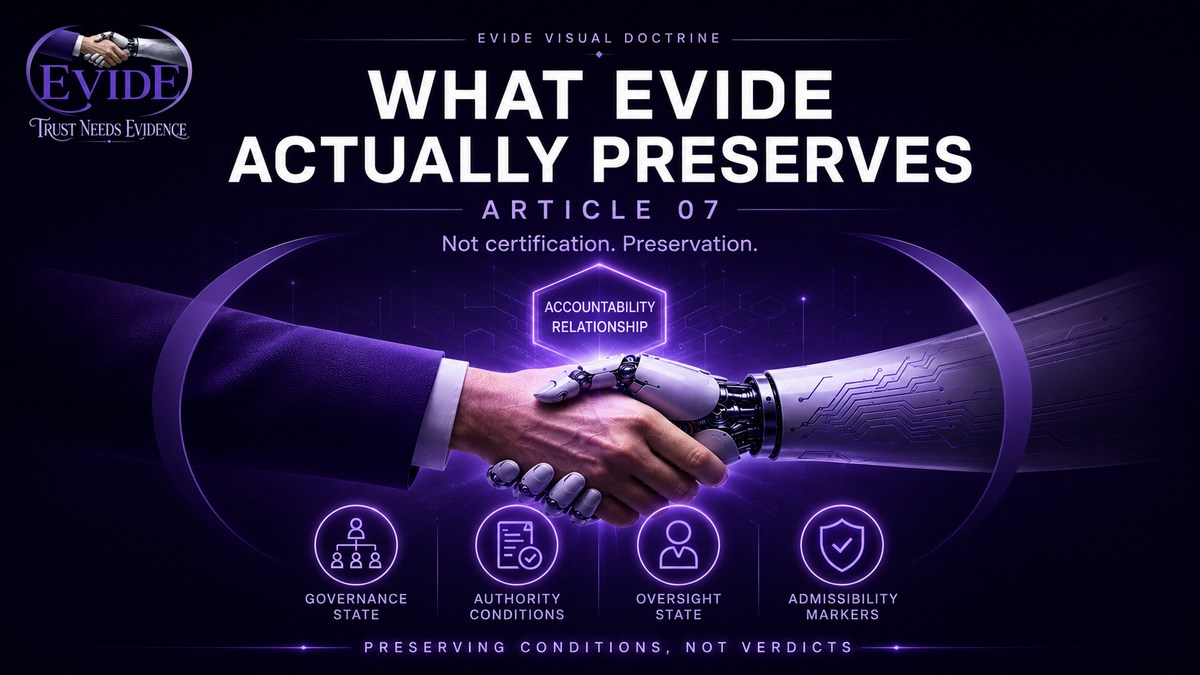
What EVIDE Actually Certifies

Accountability closure. Admissibility. Governance conditions. Oversight state. EVIDE does not certify decisions - it certifies the conditions under which decisions were made and responsibility was exercised.

Article not yet published
Coming soon

Meaningful Oversight vs Decorative Oversight

Human presence is not the same as human accountability. This article maps the critical distinction between nominal oversight, real supervision, semantically effective oversight, and oversight that has already collapsed under throughput pressure - while all dashboards still show green.

Article not yet published
Coming soon

Boundary Readiness

From candidate to verified. Continuity. Externalization before degradation occurs. The architectural journey of a decision state from internal closure to independently reconstructable evidentiary record.

Article not yet published
Phase 3 โ€” EVIDE Inferences
Coming soon

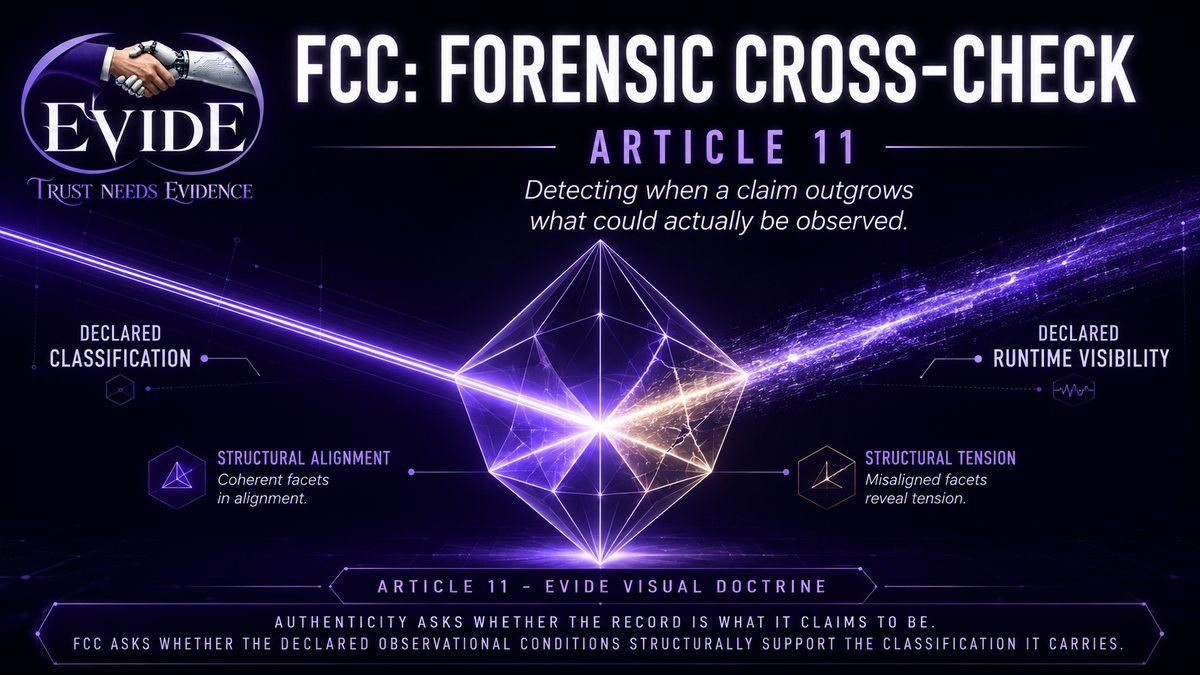
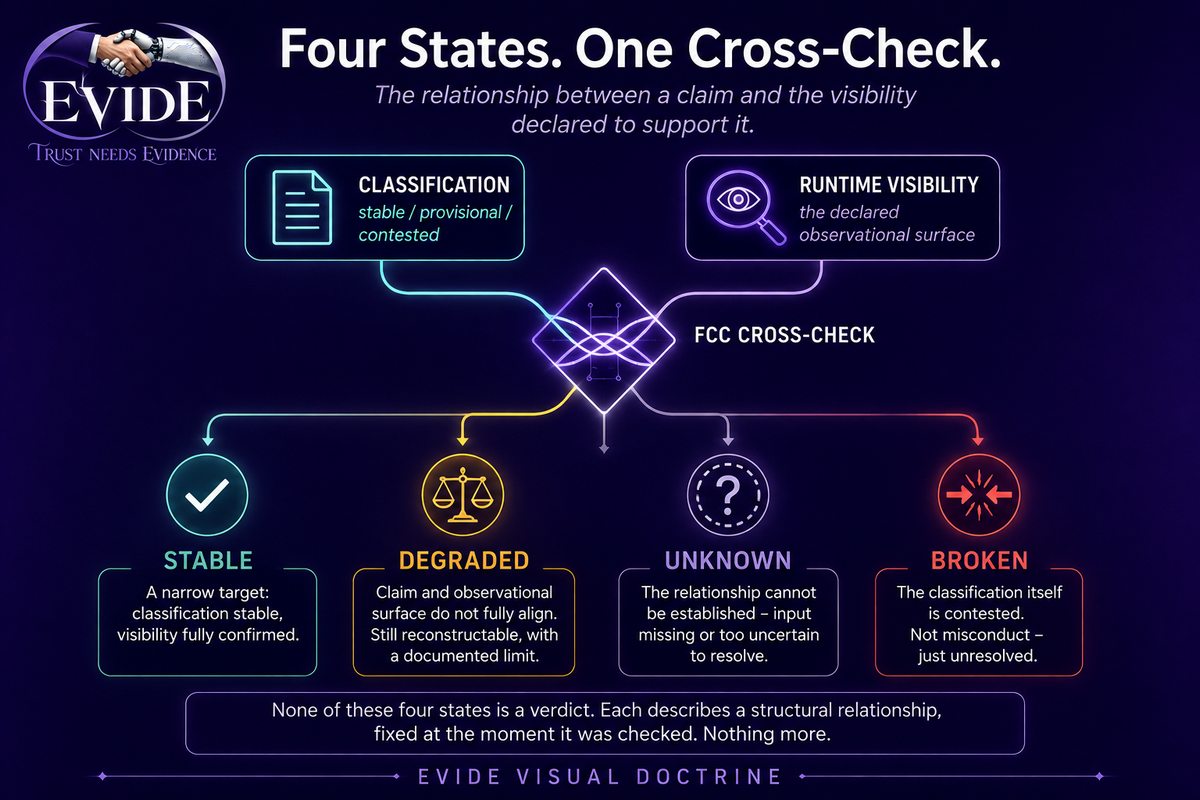
FCC - Forensic Cross-Check

Classification ร— runtime_visibility โ†’ stable / degraded / broken. The Anti-Synthetic-Coherence sensor: detecting objects where the classification claim exceeds what the gate could actually observe.

Article not yet published
Coming soon

FAC - Formal Accountability Collapse

From declared to fragmented accountability. Not misconduct. Not corruption. A structural condition where every closure appears intact while the governance infrastructure has already become operationally non-viable.

Article not yet published
Coming soon

DWC - Decision Wave Compression

When throughput exceeds oversight capacity. A fully logged, fully compliant system where the pressure of machine-scale decision velocity has already emptied oversight of its actual semantic meaning.

Article not yet published
Phase 4 โ€” DAPI + Agentic AI
Coming soon

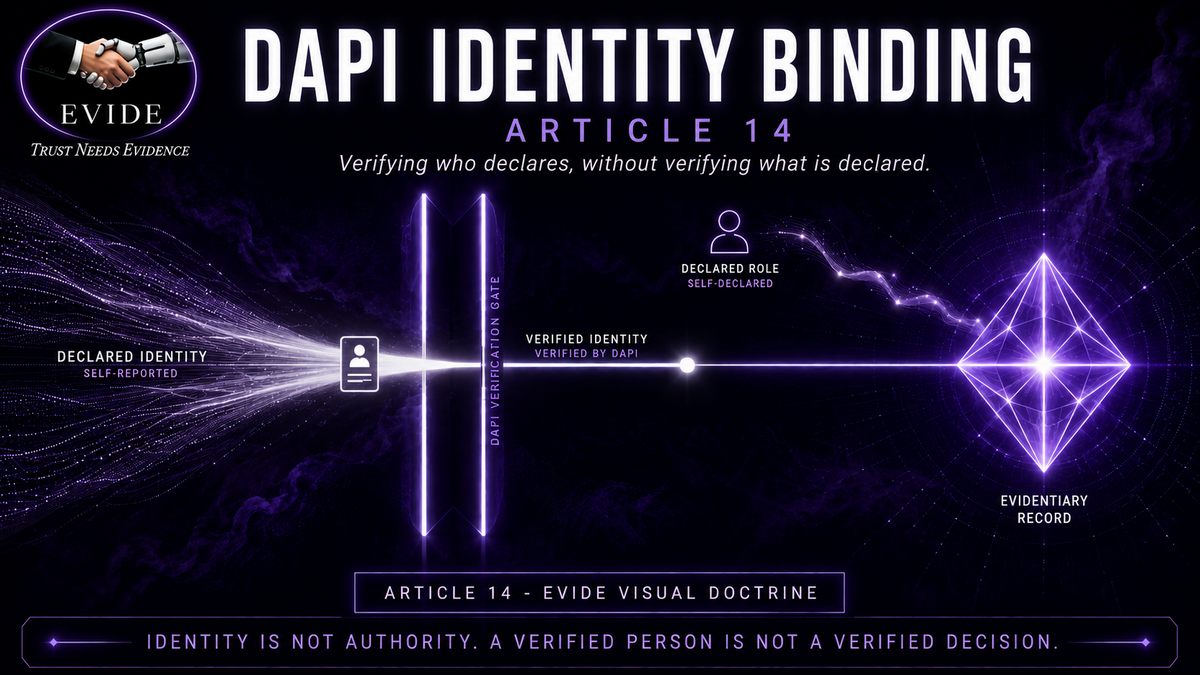
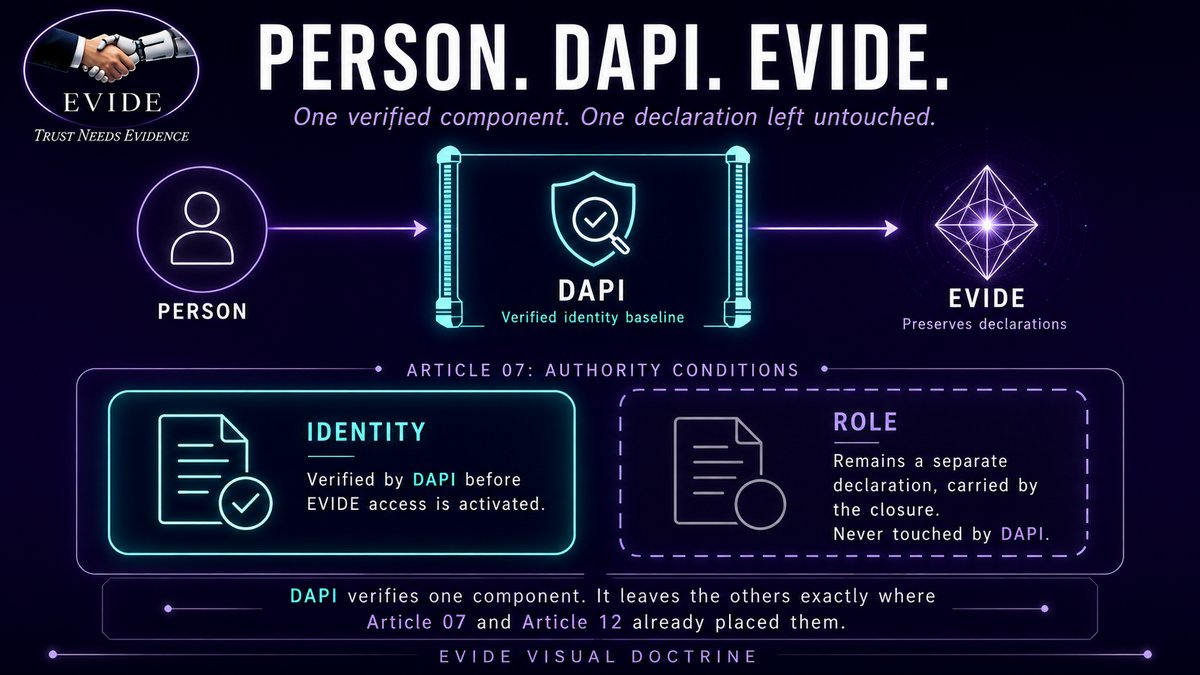
DAPI Identity Binding

Verified identity. Attributable accountability. Public-sector AI. How DAPI closes the identity gap in AI-assisted decisions and makes "who decided" independently verifiable and non-repudiable.

Article not yet published
Phase 5 โ€” The Complete Framework
Coming soon

From Execution Logs to Accountable Decisions

The final article of the EVIDE Visual Doctrine. A complete recap of the evidentiary governance framework - from the AI Act gap to independently reconstructable accountability at scale.

Article not yet published

Follow the EVIDE Visual Doctrine series

Subscribe to the LinkedIn newsletter to receive each new article as it is published. New visual models, forensic governance diagrams, and evidentiary architecture concepts โ€” one concept at a time.

Subscribe on LinkedIn